
How to Extend the Lifespan of Wooden Fence Posts
June 23, 2026 1:51 pm Leave your thoughtsWooden fences add charm, privacy, and structure to any property. But anyone who has owned one long enough knows the frustration of watching a sturdy post slowly lean, crack, or crumble at the base. The good news is that with the right approach, you can protect wood fence posts from premature decay and keep your fence standing strong for decades. Whether you are installing a brand new fence or maintaining an existing one, understanding how to fight moisture, insects, and soil contact is the foundation of smart fence maintenance tips that actually work.
Why Wooden Fence Posts Fail Prematurely
Before you can fix a problem, you need to understand what causes it. The number one enemy of a wooden fence post is moisture. Water that sits against the wood, whether from rain, irrigation, or soil contact, slowly breaks down the fibers of the wood over time. This creates the perfect environment for fungal rot, which eats away at the post from the inside out.
A second major threat is insect damage. Termites and carpenter ants are drawn to soft, moist wood. Once they establish a colony inside a post, the structural damage spreads quickly and quietly. By the time you notice the problem on the surface, the interior of the post may already be hollowed out.
Soil chemistry also plays a role. Certain soils with high acidity or high moisture retention accelerate wood decay at a faster rate than dry, sandy soils. If you live in a region with clay-heavy soil or frequent rainfall, your posts face a much tougher environment than those installed in arid climates. Understanding these factors is the first step in building a fence maintenance strategy that prevents fence rot before it starts.
Choosing the Right Wood and Treatment from the Start
Not all wood is created equal when it comes to fence building. If you are starting from scratch, your material choice will have a massive impact on how long your posts last. Pressure-treated lumber is the most widely recommended option for fence posts that go into the ground. The treatment process forces preservatives deep into the wood fibers, making it far more resistant to both rot and insects than untreated wood.
Among naturally rot-resistant species, cedar and redwood stand out. These woods contain natural oils that repel moisture and discourage insects, making them solid choices even without additional chemical treatment. However, they do cost more than standard pine or fir, so budget considerations often come into play.
If you are using pressure-treated wood, make sure the lumber is rated for ground contact. Posts that go directly into the soil require a higher level of preservative treatment than wood used above ground. Look for labels that indicate the appropriate use rating, because using a lower-grade treated wood in the ground is a shortcut that leads to early failure.
Applying a wood sealant or preservative before installation adds another layer of defense. Pay special attention to the cut ends of posts, since the exposed end grain absorbs moisture at a much higher rate than the sides. Coating those ends thoroughly with a quality preservative gives your posts a head start before they ever touch the ground.
How to Properly Install Fence Posts to Prevent Rot
Even the best wood will fail if it is installed incorrectly. One of the most effective fence maintenance tips you can apply happens before the fence is even finished. The way a post sits in the ground determines how much moisture it collects and retains over time.
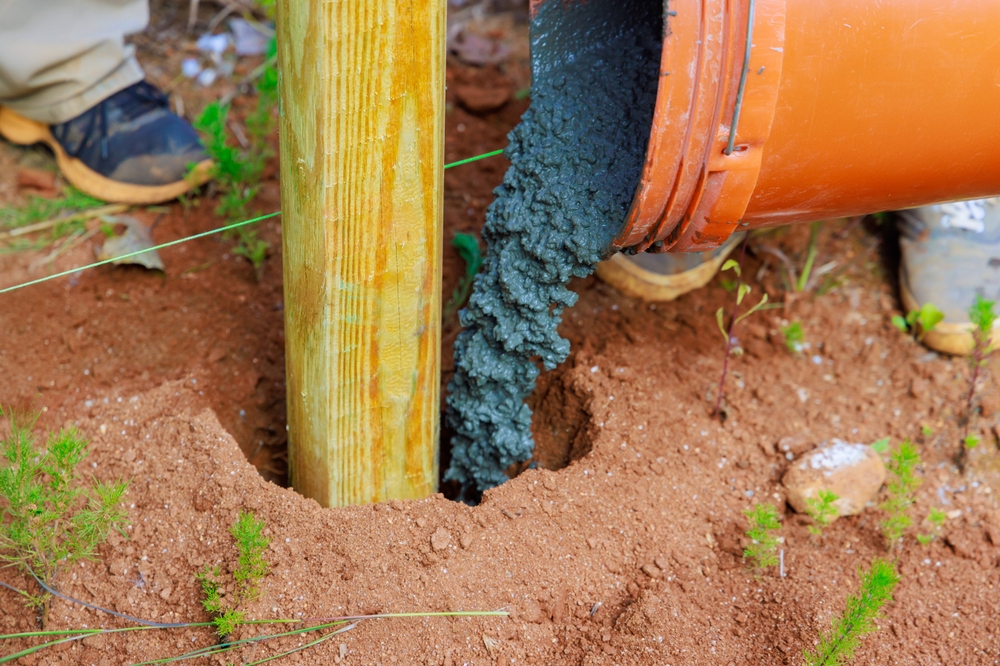
When setting posts in concrete, many homeowners pour the concrete so that it sits flush with or slightly above the soil line. This creates a basin around the post where water collects and sits, which is one of the fastest ways to accelerate decay. Instead, shape the top of the concrete into a slight slope or dome so that water runs away from the post rather than pooling around it.
Using gravel at the base of the post hole is another smart practice. A few inches of crushed gravel beneath the post allows water to drain downward rather than sitting at the bottom of the hole where it would keep the post end constantly wet. This simple step can add years to the life of a post.
Some installers prefer to use metal post anchors or standoffs that elevate the wooden post slightly above the concrete base. This keeps the wood from sitting in direct contact with the ground and allows air circulation around the base of the post. While this method is not suitable for every application, it is particularly valuable in areas with heavy rainfall or poor drainage.
Ongoing Maintenance to Protect Wood Fence Posts
Installation is only the beginning. To truly protect wood fence posts over the long haul, you need a regular maintenance routine. Inspecting your fence at least once a year is a habit that pays off enormously. Look for signs of soft or spongy wood at ground level, discoloration, cracking, or visible fungal growth. Catching rot early means you can treat it before the structural integrity of the post is compromised.
Applying a water-repellent wood sealant every two to three years is one of the most impactful fence maintenance tips for existing fences. Over time, UV exposure and weathering break down the protective coating on the surface of the wood. Reapplying a quality sealant refreshes that barrier and keeps moisture from penetrating the wood fibers.
Keep plants, mulch, and soil from piling up against the base of your posts. Organic material that stays in contact with the wood traps moisture and provides food for fungi and insects. Maintaining a clear zone around the base of each post helps with airflow and drainage.
For posts that are already showing early signs of decay, you can use a wood hardener product to stabilize the damaged fibers and slow the progression. Follow up with a penetrating wood preservative to treat the area and reduce further moisture absorption. This is not a permanent fix for severe rot, but it can meaningfully extend the life of a post that is just beginning to deteriorate.
If you use a sprinkler or irrigation system, make sure the spray is not hitting your fence posts directly. Repeated wetting from irrigation is one of the most overlooked causes of early rot, particularly in dry climates where homeowners do not think of water as a threat to their fencing.
Painting or staining your fence also provides a layer of protection. A good exterior-grade stain penetrates the wood and repels water, while also protecting against UV damage that dries out and cracks the wood surface. Lighter-colored stains reflect more heat, which can reduce the amount of thermal expansion and contraction the wood experiences over time, reducing cracking.
When to Replace vs. Repair a Fence Post
Even with the best care, some posts will eventually need to be replaced. Knowing when repair is viable and when replacement is the smarter move saves time and money. A post that is soft, spongy, or crumbling at the base has likely lost too much structural integrity to be saved. Continuing to prop it up or patch around it puts the entire fence line at risk.
However, if the damage is limited to surface checking, minor cracking, or very early-stage softening, targeted treatment and repair may be sufficient. Splicing a new post section alongside a damaged lower section, a technique known as sistering, can restore stability without a full replacement.
The cost of replacing one post proactively is far less than dealing with a leaning fence panel, damaged hardware, or a collapse that takes out multiple sections at once.
Conclusion
Learning how to prevent fence rot is one of the best investments a homeowner can make in their property. From choosing the right wood and treatment at the start, to proper installation and consistent upkeep, every step you take adds years to the life of your fence. With smart choices and a bit of seasonal attention, your wooden fence posts can remain solid and dependable for far longer than you might expect.
Need a Small Log Supplier in Lapoint, UT?
Categorised in: Wooden Fence Posts
This post was written by admin